 4.6 / 5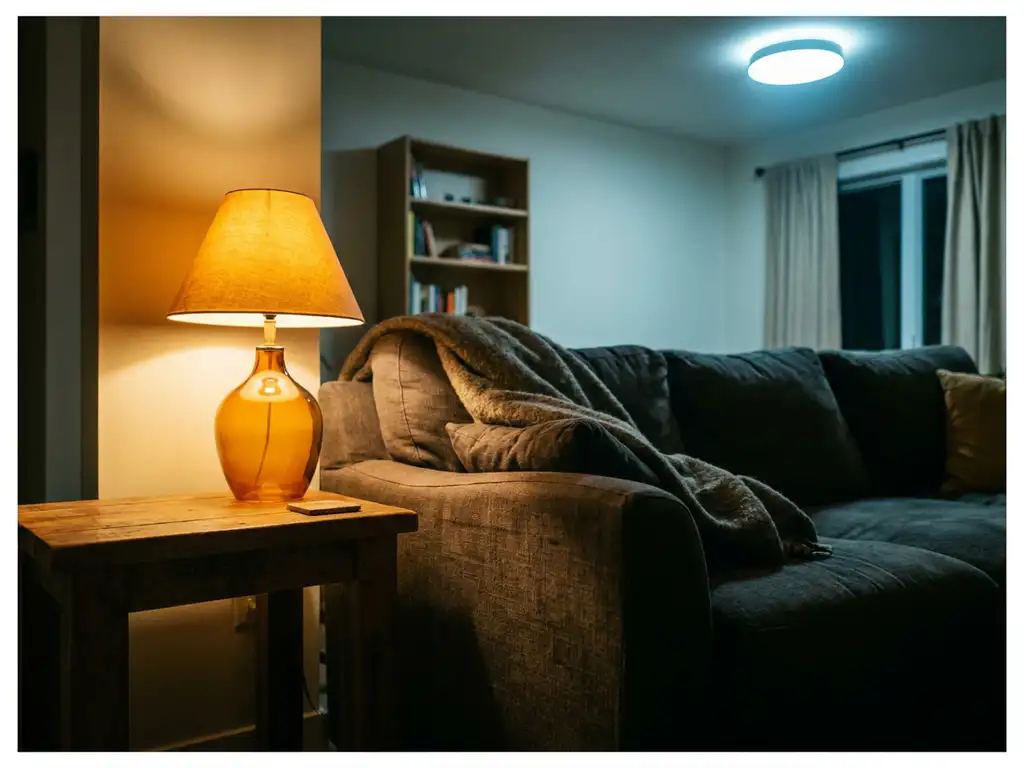
Ambient lighting and general lighting differ in their purpose and light characteristics. General lighting is functional: it provides sufficient light to perform tasks. Mood lighting is softer, warmer, and focused on ambiance rather than functionality. The difference lies in light intensity, color temperature, direction, and how you use it in a room. In this article, we answer the most frequently asked questions about mood lighting and how to use it effectively in your home.
What lighting characteristics make lighting mood lighting?
Ambient lighting differs from standard lighting through a combination of low light intensity, warm color temperature, and strategic placement. While functional lighting illuminates a space evenly and brightly, ambient lighting creates depth and warmth by playing with shadows, accents, and a soft glow.
The main features of ambient lighting are:
- Color temperature: Ambient lighting typically has a warm color temperature ranging from 2,200 to 2,700 Kelvin. This produces an orange-yellow hue similar to candlelight or a sunset.
- Light intensity: Ambient lighting operates at lower lumen levels. Dimmable lighting, which you can adjust as needed, plays a key role in this.
- Lighting direction: Ambient lighting is either indirect or directed at a specific object or surface, such as a wall, a painting, or a ceiling. This prevents glare and adds depth to the room.
- Placement in the room: Floor lamps, wall sconces, and table lamps placed at eye level or lower contribute much more to the ambiance than a central ceiling light.
Together, these characteristics determine whether lighting is perceived as functional or atmospheric. Even a small adjustment, such as dimming an existing light, can make a big difference in how a space is perceived.
Regel het licht precies zoals u wilt
Ontdek onze led-dimmers en controls: draaiknop, drukknop of aanraakvrij — altijd upgradebaar.
Bekijk led-dimmersWhat are the practical differences in use between mood lighting and regular lighting?
The main practical difference lies in when and how you turn on each type of lighting. You use general lighting actively, for tasks such as cooking, reading, or working. You turn on mood lighting when the activity stops and relaxation begins, or to give a room a certain ambiance for guests.
In practice, this means that many households combine both types of lighting in the same room. A living room needs bright, neutral lighting during the day or while eating. The same room can be transformed into a relaxing environment in the evening by switching to dimmed lighting or turning on a separate mood lamp.
Standard lighting requires little adjustment: you simply turn it on or off. Ambient lighting requires a bit more attention when it comes to placement, dimming, and timing. Modern dimmable switches make this transition easier than ever, without the need for additional wiring.
Which light sources are best suited for mood lighting?
LED bulbs with a warm color temperature and dimmable features are the most suitable light sources for mood lighting. They combine energy efficiency with the right light color and are available in virtually any shape and base.
In addition to standard LED bulbs, there are light sources specifically designed to create ambiance:
- Filament LED bulbs: These bulbs mimic the look of classic incandescent bulbs with visible filaments. They emit a nostalgic, warm light and are popular in living rooms and dining rooms.
- LED strips: Ideal for indirect lighting behind furniture, under kitchen cabinets, or along ceiling moldings. They are often dimmable and sometimes also color-adjustable.
- Smart bulbs: Smart LED bulbs that let you adjust the brightness and color using an app or voice control. Handy if you want to quickly switch between functional and mood lighting.
Incandescent bulbs naturally provide ambient lighting thanks to their warm color, but they are no longer energy-efficient. Halogen bulbs fall somewhere in between: warmer than fluorescent bulbs, but less efficient than LEDs. For most homes, dimmable LEDs are the best choice for ambient lighting.
Can regular lighting be converted into mood lighting?
Yes, in many cases, standard lighting can be converted into mood lighting without major renovations. The simplest solution is to replace the existing bulb with a warm-white, dimmable LED bulb and add a dimmer switch to the outlet.
Here are the most effective ways to turn ordinary lighting into mood lighting:
- Replace the bulb: Choose an LED bulb with a color temperature of 2200 to 2700 Kelvin and make sure it is dimmable.
- Install a dimmer switch: An LED dimmer switch replaces your existing switch and gives you direct control over the brightness. Modern models are easy to install without any additional wiring.
- Add extra light sources: Consider placing a table lamp or floor lamp in a strategic spot. This doesn’t have to cost anything to install and makes a big difference in the atmosphere.
- Use indirect lighting: Point existing spotlights toward the wall or ceiling instead of straight down. This softens the light without requiring you to replace anything.
Even in older homes with outdated wiring, there are wireless solutions that easily transform functional lighting into mood lighting without having to tear down walls.
What is the difference in energy consumption between mood lighting and regular lighting?
Mood lighting generally uses less energy than standard lighting because it operates at a lower brightness level. When you dim a light to 50% of its maximum brightness, energy consumption drops significantly, depending on the type of light and the dimmer used.
This effect is most pronounced with LED lighting. LED bulbs are already more energy-efficient than incandescent or halogen bulbs, and dimming further enhances that benefit. An LED bulb that consumes ten watts at full power can be dimmed down to three to five watts while still providing ample ambient lighting.
On the other hand, mood lighting is used more frequently and for longer periods than functional lighting. You use a task light for specific purposes, while mood lighting stays on all evening. Total energy consumption therefore depends on how you use it, not just on the wattage. Smart dimming and timer switches help automatically reduce that consumption.
When should you choose mood lighting, and when should you choose functional lighting?
The choice between ambient lighting and task lighting depends on the activity and the time of day. You should opt for task lighting when concentration, safety, or task performance are the priority. Ambient lighting is ideal for relaxation, socializing, and creating a pleasant atmosphere.
A handy rule of thumb: if your eyes need to work, opt for task lighting. If you want to relax or set the mood, switch to ambient lighting. In most rooms, you’ll need both, at different times.
Examples by situation:
- The kitchen while cooking: Functional, bright lighting above the countertop.
- Dining room during dinner: A dimmed pendant light above the table to create a cozy atmosphere.
- Living room in the evening: Ambient lighting from a floor lamp or a dimmed ceiling light.
- Bedroom for sleeping: Warm, soft ambient lighting to help the body wind down.
- Home office during the day: Neutral, bright light to help you concentrate.
The best approach is a lighting plan where you consider both functions for each room and make sure you can easily switch between the two.
How Freelux Helps Create Ambient Lighting
At Freelux, we believe that ambient lighting should be accessible to everyone, even without renovations or technical expertise. Our products are specially designed to easily transform standard lighting into smart, ambient lighting. Here’s what we offer:
- Digital LED dimmers: Available as rotary dimmers, push-button dimmers, or touchless dimmers, all of which are easy to install as replacements for existing switches. View our selection of LED dimmers and controls.
- Smart light switches: With Bluetooth, Wi-Fi, or Zigbee for integration with platforms such as Philips Hue, Homey, and KlikAanKlikUit. Discover our LED light switches.
- Timer switches and programmable timers: So that mood lighting turns on and off automatically at the right time, without you having to think about it.
- Compatibility with existing wiring: Our products fit into standard System 55 flush-mount frames, so installation requires minimal modifications.
Schakelen zoals het u uitkomt
Bekijk onze led-lichtschakelaars: eenvoudig te installeren en klaar voor de toekomst.
Bekijk lichtschakelaarsWant to know which dimmer or switch is best suited to your needs? Contact us and we’ll be happy to help.
Frequently Asked Questions
What kind of dimmer do I need if I want to dim multiple lights in a single room?
To dim multiple lights on a single circuit, you’ll need a dimmer with a higher maximum power rating, matched to the total wattage of all connected LED lights. Also make sure that all lights in the circuit are dimmable and preferably of the same type, as mixed light sources can cause flickering or uneven dimming behavior. Always check the minimum and maximum load the dimmer can handle before installing it.
Can I also use mood lighting outdoors, for example on a patio or in the garden?
Yes, ambient lighting works just as well outdoors as it does indoors. Be sure to choose lighting products with an appropriate IP rating (at least IP44 for outdoor use) so they can withstand moisture and the elements. Consider warm white outdoor wall sconces, ground spotlights aimed at plants, or LED strips under a canopy. An astro timer is especially handy here: it automatically turns on the outdoor mood lighting at sunset and off at a preset time.
My LED light flickers when I dim it. What's causing this, and how can I fix it?
Flikker bij het dimmen wordt meestal veroorzaakt door een incompatibiliteit tussen de dimmer en de LED-lamp. Niet elke dimmer werkt goed met elke LED-lamp, ook al zijn beide in theorie ‘dimbaar’. De oplossing is om een dimmer te kiezen die specifiek compatibel is verklaard met jouw LED-merk, of om over te stappen op een LED-lamp die door de dimmerfabrikant wordt aanbevolen. Controleer ook of de belasting van de dimmer niet te laag is, want sommige LED-dimmers vereisen een minimaal wattage om stabiel te functioneren.
How can I use mood lighting in a small space without making it look dark or cramped?
In small spaces, it’s a good idea to combine ambient lighting with light sources that illuminate the walls or ceiling, as this creates the illusion of more space. Choose wall sconces or uplighters that direct the light upward, and avoid heavy, dark lampshades that constrain the light. A light wall color significantly enhances the effect of indirect ambient lighting. This way, you can enjoy a warm atmosphere without the room feeling smaller.
Does soft lighting in the bedroom really help you sleep better, or is that just a myth?
It’s not a myth: warm, dimmed lighting in the evening helps the body produce melatonin, the hormone that promotes sleep. Blue and cool white light (above 4000 Kelvin), on the other hand, inhibits melatonin production and keeps you awake longer. By choosing ambient lighting in the bedroom with a color temperature of 2200 to 2700 Kelvin and dimming it in the hours before bedtime, you can easily support your natural sleep rhythm.
What is a common mistake when setting up mood lighting in the living room?
One of the most common mistakes is relying on just one central light source, such as a single ceiling light, and simply dimming it. A true ambiance is created by combining multiple light sources at different heights, such as a floor lamp, a table lamp, and perhaps some indirect wall lighting. A single dimmed light source can quickly make a space feel bare or gloomy, while multiple soft light sources work together to create a warm, layered ambiance.
How do I go about converting my home to mood lighting step by step without a large budget?
Start with the room where you spend the most time, usually the living room. The first step is to replace existing light bulbs with warm white, dimmable LED bulbs (2200–2700K) and install an LED dimmer on the existing switch. Next, add one affordable floor lamp or table lamp in a strategic spot, such as next to the sofa. This way, you can easily create an atmospheric lighting layer without a major investment, which you can later expand as desired with smart switches or additional light fixtures.