 4.6 / 5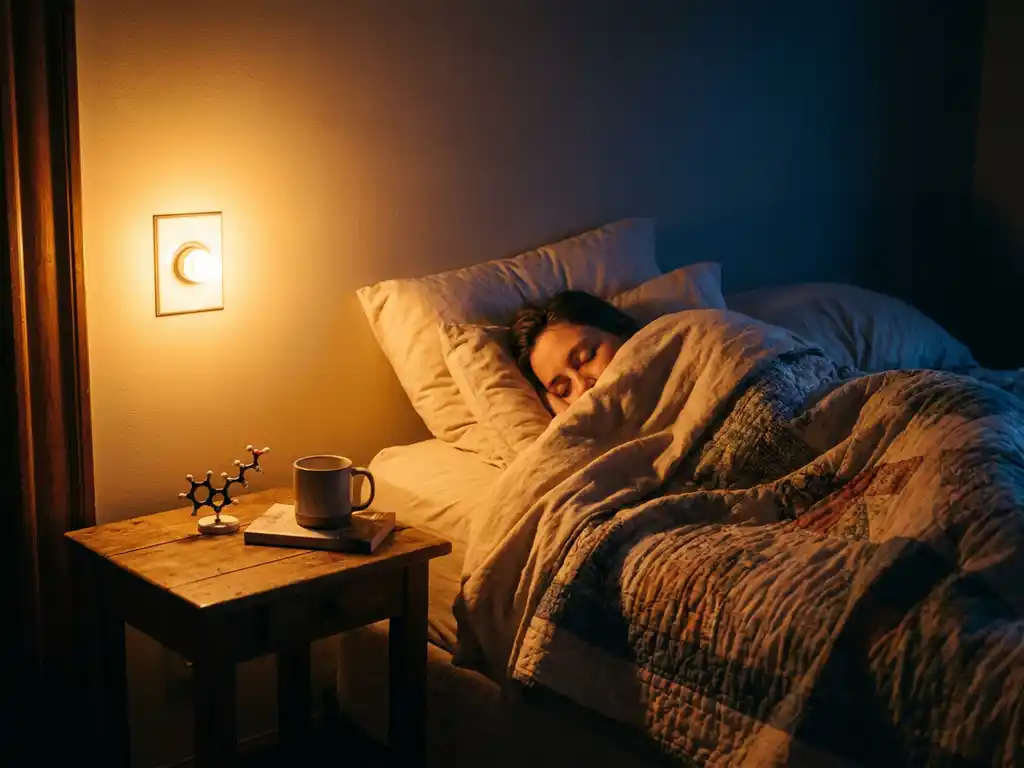
Dimming the lights has a direct effect on melatonin production: the less light your eyes are exposed to in the evening, the sooner and more abundantly your body produces this sleep hormone. The intensity and color of the light, in particular, determine how strong this effect is. In this article, we answer the most frequently asked questions about light, dimming, and getting a better night’s sleep.
How does light intensity affect melatonin production?
The brighter the light in the evening, the stronger the signal your brain receives to stay awake. Light intensity is measured in lux, and even relatively dim artificial light of 100 lux can noticeably slow down melatonin production. If you dim the lights, your brain is more likely to give the green light for sleep.
Your body operates on an internal rhythm, known as the circadian clock, which responds to light and darkness. During the day, bright light promotes alertness and energy. As soon as it gets darker outside, your body expects light exposure to decrease indoors as well. If the light remains intense, your brain thinks it’s still daytime and delays melatonin production. You’ll notice this: you feel less sleepy than you would expect based on the time of day.
The good news is that you can actively influence this process. By gradually lowering the light intensity in the evening, you mimic the natural transition from day to night and help your body wind down at the right time.
Which color of light has the greatest effect on melatonin?
Blue light has the strongest inhibitory effect on melatonin production. Blue light activates specific receptors in the eye that are directly linked to the body’s internal clock. Cool white light, such as that from daylight lamps or a phone screen, contains a lot of blue light and is therefore the most disruptive to your sleep cycle.
Warm white light, with a color temperature below 3000 Kelvin, contains much less blue light. Think of the warm yellow glow of a traditional incandescent light bulb or the light from a candle. This type of light has a much less inhibitory effect on melatonin and is therefore better suited for the evening hours.
If you want to dim the lights for a better night’s sleep, combine that with the right color temperature. If you dim a cool-toned LED bulb, you reduce the brightness, but the blue light remains. It’s best to choose warm-toned LED lighting in the bedroom and living room that you use in the evening.
How far in advance should you dim the lights to get a good night's sleep?
To have a noticeable effect on your sleep quality, it’s a good idea to dim the lights at least one to two hours before your desired bedtime. This gives your body enough time to start producing melatonin and begin the transition to sleep.
Gradually dimming the lights works better than turning them off suddenly. Imagine you want to go to sleep at 11:00 PM: start dimming the lights in the living room around 9:00 PM. Also, avoid bright light from other sources, such as phones and televisions, because they cancel out the effect of dimmed lights.
A handy step-by-step guide for the evening:
- Two hours before bedtime, set the ceiling lights to 50% or lower.
- An hour before bedtime, switch to mood lighting or floor lamps with warm light.
- Avoid using screens during the last half hour before bedtime.
- Make sure the bedroom is as dark as possible when you go to bed.
What is the difference between using a dimmer switch and simply turning off the light?
The difference lies in the gradual nature and flexibility. Turning off the lights results in an abrupt transition from bright to complete darkness, whereas a dimmer allows you to reduce the light intensity step by step. That gradual transition is much more beneficial from a biological perspective, as it mimics the natural twilight.
What’s more, with a dimmer switch, you don’t have to choose between “on” or “off.” You can maintain a pleasantly low light level that’s still comfortable enough for reading or relaxing, without your brain being stimulated by bright lighting. That’s exactly the range in which melatonin production is optimally stimulated.
Simply turning off the light can also help, but the downside is that you’ll be sitting in the dark or will have to turn on a bright light again as soon as you need something. A dimmer switch gives you that middle ground, which works much better in practice for a consistent evening routine.
What is the best type of lighting to use in the bedroom?
The best lighting for the bedroom is warm white light with a color temperature between 2200 and 2700 Kelvin, dimmable and preferably indirect. Avoid ceiling spotlights that shine directly into your eyes, and opt for wall or table lamps that direct the light downward or to the side.
When choosing lighting for the bedroom, keep the following points in mind:
- Color temperature: always choose warm white, not daylight or cool white.
- Dimming function: Make sure the light is compatible with an LED dimmer.
- Lighting direction: Indirect light is more soothing than direct spotlights.
- Light source: LED bulbs with a warm light spectrum are energy-efficient and promote better sleep.
Also avoid night lights that emit blue or white light. If necessary, choose a red or orange night light, as those wavelengths have the least impact on melatonin.
Can a smart dimmer automatically improve your sleep schedule?
Yes, a smart dimmer can automatically support your sleep schedule by gradually dimming the lights at set times, without you having to think about it. Using a timer or by linking it to a smart home system, you set it up once to determine when the lights start dimming, and after that, the process runs automatically every night.
This is the main advantage over a standard dimmer switch: you don’t have to consciously remember to dim the lights every night. Automation ensures consistency, and consistency is exactly what your body clock needs to function properly. A regular sleep schedule, supported by consistent light patterns, helps your body fall asleep faster and sleep more deeply.
Smart dimmers can also be linked to sunset times, so that the timing automatically adjusts to the season. In winter, it gets dark earlier, and your lighting adjusts accordingly.
How Freelux Helps You Dim the Lights for a Better Night's Sleep
At Freelux, we understand that a good night’s sleep starts with the right lighting. Our digital LED dimmers are designed to be easy to install, simple to use, and ready to go right away—no complicated setup or technical knowledge required. Whether you’re looking for a basic rotary dimmer or a smart model with timer or Zigbee functionality, we have a solution that fits your home and bedroom.
What our dimmers can do for you:
- Gradually dim the lights for a natural transition to sleep.
- Compatible with warm LED lighting for the optimal sleep-friendly spectrum.
- Smart models with a timer so that dimming happens automatically every evening.
- Suitable for existing wiring; no renovation required.
- Available in various models that fit standard mounting frames.
Browse our full selection of digital LED dimmers in our online store and choose the dimmer that’s right for your bedroom. Do you have any questions or would you like advice on the best solution for your situation? Feel free to contact us—we’re happy to help.
Frequently Asked Questions
Will dimming the lights help even if I’ve had trouble sleeping for years?
Dimming the lights is not a medical treatment, but managing your evening light exposure is a proven way to support your circadian rhythm. Even with long-term sleep problems, consistently following a dimming routine can make a noticeable difference after a few weeks. If you have severe or persistent sleep problems, it’s wise to also consult a doctor or sleep therapist so you can combine light management with other approaches.
What if I still have to work or read in the evening—should I still dim the lights?
You can still work or read just fine with dimmed, warm lighting. Use a task lamp with warm white light (under 3000 Kelvin) instead of the ceiling lights, so you have enough light for your activity without brightly illuminating your entire surroundings. If you’re working on a screen, turn on night mode or use a blue light filter on your device, and try to finish screen time at least half an hour before bedtime.
Can't all LED bulbs be dimmed using any dimmer?
No, this is a common mistake: not every LED bulb is compatible with every dimmer. Older phase-cut dimmers designed for incandescent bulbs often do not work well with LED bulbs and can cause flickering, buzzing, or damage to the bulb. Always check that the LED bulb is labeled "dimmable" and choose a dimmer specifically designed for LEDs, such as Freelux's digital LED dimmers.
How soon will I see results if I start dimming the lights in the evening?
Many people notice within two to seven days that they start feeling sleepy sooner at their desired bedtime, because melatonin production kicks in earlier. A lasting effect on your sleep quality—such as sleeping more deeply and waking up feeling more refreshed—builds up over two to four weeks of consistent use. The more regularly you stick to the dimming routine, the more your body clock will synchronize.
Does dimming the lights in the living room make a difference too, or does it only matter in the bedroom?
The living room is just as important as the bedroom, because that’s where you spend most of your evenings before going to bed. It is precisely during that time—one to two hours before bedtime—that lowering the light intensity in the living room has the greatest impact on your melatonin production. If you only dim the lights in the bedroom but leave the living room brightly lit, the biological signal for sleep will already be largely disrupted by the time you go to bed.
Can I easily replace an existing switch with a dimmer switch?
In most cases, yes: a standard wall switch can be replaced with a recessed dimmer without any remodeling, provided the wiring in the wall supports it. Freelux dimmers are designed for existing wiring and fit into standard recessed frames, making installation easy. If you have any doubts about your electrical system, have the installation performed by a licensed electrician.
Is a red-orange night light really necessary, or can I just sleep in the dark?
Sleeping in complete darkness is ideal for melatonin production and the best choice if that’s comfortable for you. A nightlight is only useful if you want to be able to move around safely at night—for example, to the bathroom—without turning on bright lights. In that case, choose red or orange light, as those wavelengths interfere least with melatonin production and help you fall back asleep quickly afterward.