 4.6 / 5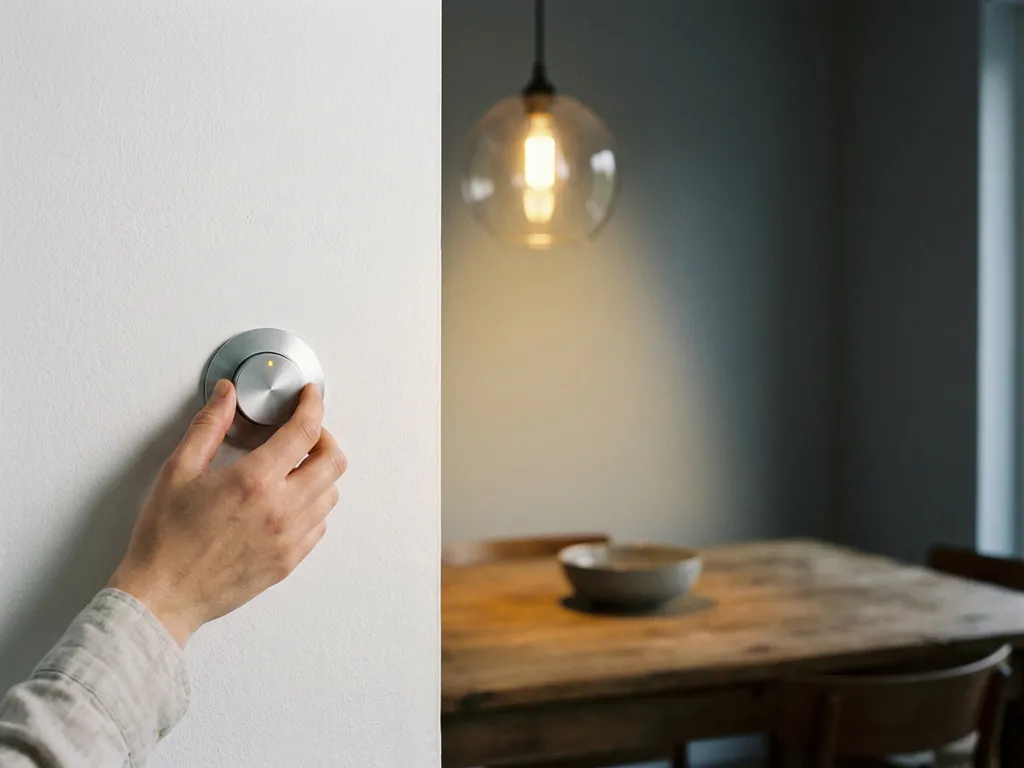
Dimming your lights saves energy right away: with LED lighting, power consumption drops almost in direct proportion to the dimming level. If you dim a light to 50%, it will use about 50% less power. That sounds simple, and it is. In this article, we answer the most frequently asked questions about dimming and energy savings, so you know exactly what the benefits are.
How many watts do you save when you dim the lights?
When you dim an LED bulb, its power consumption drops almost proportionally. A 10-watt LED spot light dimmed to 70% brightness consumes only about 7 watts. That difference may seem small per light, but it adds up quickly if you have multiple spot lights or fixtures in your home. In a living room with ten spot lights, you can save as much as 30 watts per hour compared to full power.
The effect is even greater when you combine dimming with mindful lighting habits. If you consistently set your lighting to 60 to 70% in the evening instead of 100%, the savings over the course of a year add up significantly. Especially in rooms where you spend a lot of time, such as the living room or bedroom, this is one of the easiest ways to reduce your energy consumption without sacrificing comfort.
Does dimming work differently with LEDs than with incandescent bulbs?
Yes, dimming works fundamentally differently with LEDs than with incandescent bulbs. With an incandescent bulb, the amount of current is reduced, causing the filament to get less hot and emit less light. With LED lighting, the dimmer controls the voltage or the pulse width of the signal, which has a direct effect on the light level without causing unnecessary heat loss.
The main difference lies in efficiency. Incandescent bulbs already convert most of their energy into heat rather than light. Dimming helped somewhat, but efficiency remained low. LED bulbs are inherently much more efficient, and dimming enhances that advantage. Not only do you use less electricity, but the bulb also lasts longer.
However, it is important to use a dimmer that is specifically designed for LED lighting. Not all dimmers work well with LED bulbs. An incompatible combination can cause flickering, buzzing, or even damage to the bulb. Always check to make sure the dimmer and the LED bulb are compatible.
What is the difference between a regular dimmer and a smart dimmer?
A standard dimmer lets you manually adjust the light level using a rotary knob or push button. A smart dimmer does the same, but also adds automation, remote control, and integration with other systems. This makes a smart system not only more convenient, but also more energy-efficient in practice.
With a smart dimmer, you can, among other things:
- Have the lights dim automatically at certain times, such as late at night
- Set lighting scenes for different situations, such as watching TV or reading
- Control your lights via an app, even when you're not at home
- Connect to motion sensors so that the lights turn off automatically when no one is in the room
- Integrate with platforms such as Philips Hue, Homey, or KlikAanKlikUit
In practice, a smart dimmer helps you save more energy than a regular one, simply because the automation prevents you from forgetting to dim or turn off the lights. As a result, the investment pays for itself faster than many people expect.
How much do you save on your energy bill each year?
Exactly how much you save depends on how many lights you have, how long you use them each day, and how much you dim them. As a general rule of thumb, consistently dimming your lights to an average of 70% of their maximum brightness can reduce your energy consumption for lighting by about 25 to 35%. For an average household with LED lighting, this can amount to savings of several dozen euros per year.
Here is a sample calculation to illustrate this:
- Suppose you have ten 8-watt LED spotlights in your living room.
- On average, you use them for 4 hours a day, 300 days a year.
- At full power, your annual consumption will be: 10 × 8 W × 4 h × 300 days = 96 kWh.
- At an average dimming level of 70%, that drops to about 67 kWh.
- With an electricity rate of about 0.30 euros per kWh, you can save nearly 9 euros a year—just in the living room alone.
Add the bedrooms, hallway, and kitchen to that, and the total savings add up quickly. Plus, if you combine dimming with a timer or motion sensor, you’ll save even when you forget to turn off the lights.
Which type of lighting is best suited for dimming?
LED lighting is best suited for dimming, provided the bulb and the dimmer are compatible. Not all LED bulbs are dimmable: always check the packaging or product specifications. Spotlights, downlights, and LED strips are generally easy to dim and are most commonly used in combination with a dimmer.
Lighting that is less suitable or unsuitable for dimming:
- Standard LED bulbs without a "dimmable" label
- Fluorescent lighting with a conventional ballast
- Some compact fluorescent lamps (energy-saving bulbs)
To ensure that dimming works properly, choose LED bulbs that are specifically labeled as dimmable and pair them with an LED dimmer that is compatible with your system. This will prevent flickering, buzzing noises, and a shorter lifespan for your bulbs.
Can you combine dimming with other smart features?
Yes, dimming is useful on its own, but the real added value comes when you combine it with other smart features. Modern lighting systems allow you to link dimming to timers, motion sensors, daylight sensors, and even your thermostat or security system. This way, lighting becomes an active part of your smart home.
A daylight sensor automatically adjusts the dimming level based on the amount of natural light available. If it’s light enough outside, the light dims automatically. This isn’t just convenient—it’s also one of the most effective ways to prevent unnecessary energy consumption. A timer ensures that outdoor lighting turns on exactly at sunset and off at sunrise, without you having to think about it.
Smart lighting systems such as the WIIS concept also make it possible to switch lights on and off and dim them wirelessly, without the need for additional wiring. This makes it an attractive option for existing homes where remodeling isn’t an option.
How Freelux Helps with Dimming Lights
At Freelux, we believe that smart lighting should be accessible to everyone, even if you don’t have a technical background and don’t want to do any renovations. Our product range is designed with this in mind:
- Dimmable LED dimmers in various styles, from rotary dimmers to touch-free models, all suitable for modern LED lighting
- Smart dimmers with Bluetooth, Wi-Fi, or Zigbee, compatible with Philips Hue, Homey, and KlikAanKlikUit
- Astronomical timers for outdoor lighting that automatically adjust to the sun's position
- WIIS-compatible products that operate wirelessly and are easily expandable
- All products fit into standard System 55 flush-mount frames, making installation quick and hassle-free
Whether you want to dim the lights in a single room or make your entire home smarter, we have the right solution for you. Browse our full selection of LED dimmers and lighting controls in our online store, or contact us if you’d like to know which dimmer is best suited to your needs.
Frequently Asked Questions
Can I continue to use my existing dimmer switch if I switch to LED bulbs?
Not always. Many older dimmers are designed for incandescent bulbs and do not work well with LED lighting. This can result in flickering, buzzing noises, or a limited dimming range. Check whether your current dimmer is explicitly labeled as LED-compatible, and if necessary, replace it with a dimmer designed specifically for LEDs.
How do I know if an LED bulb is actually dimmable?
Check the packaging or product specifications: dimmable LED bulbs always include the word "dimmable" or a corresponding symbol. If this is not indicated, the bulb is most likely not dimmable, and using it with a dimmer could damage the bulb or overload the dimmer. Not sure? Check with the supplier before you buy.
Does an LED bulb really last longer if I dim it regularly?
Yes, dimming has been shown to extend the lifespan of LED bulbs. A lower dimming level means less heat is generated in the bulb, and heat is the biggest enemy of LED electronics. By consistently using your bulbs at 70 to 80% brightness instead of always at full power, you can significantly extend their lifespan and save on replacement costs.
What's the best first step if I want to start dimming the lights in my home?
Start with the room where you use the most light, such as the living room. Replace any non-dimmable LED bulbs with dimmable ones and install an LED-compatible dimmer switch in the same location. This requires no additional wiring and is usually easy to do yourself. That way, you’ll immediately enjoy the comfort and savings without a major investment.
Can I use dimming for outdoor lighting as well?
Yes, dimming works well with outdoor lighting, provided you use dimmable LED bulbs that are suitable for outdoor use (with the appropriate IP rating for weather resistance). When combined with an astro timer or motion sensor, outdoor lighting is actually one of the areas where you can save the most energy, since outdoor lights are often left on for longer than necessary.
What are the most common mistakes made when installing an LED dimmer?
The most common mistakes are: using a dimmer that is not suitable for LEDs, connecting non-dimmable bulbs to a dimmer, and failing to check the dimmer’s minimum load. LED bulbs consume very little power, which means some dimmers receive too low a load and consequently flicker or malfunction. Always check both the minimum and maximum load of the dimmer and match it to the total wattage of the connected bulbs.
Is a smart dimming system also suitable for rental properties or when remodeling isn't an option?
Absolutely. There are wireless dimming solutions, such as WIIS-compatible products, that don’t require any additional wiring. These systems use Bluetooth, Wi-Fi, or Zigbee and are easy to install without making any major changes to the home. They’re ideal for renters or homeowners who want to make their lighting smarter without having to drill into the walls.