 4.6 / 5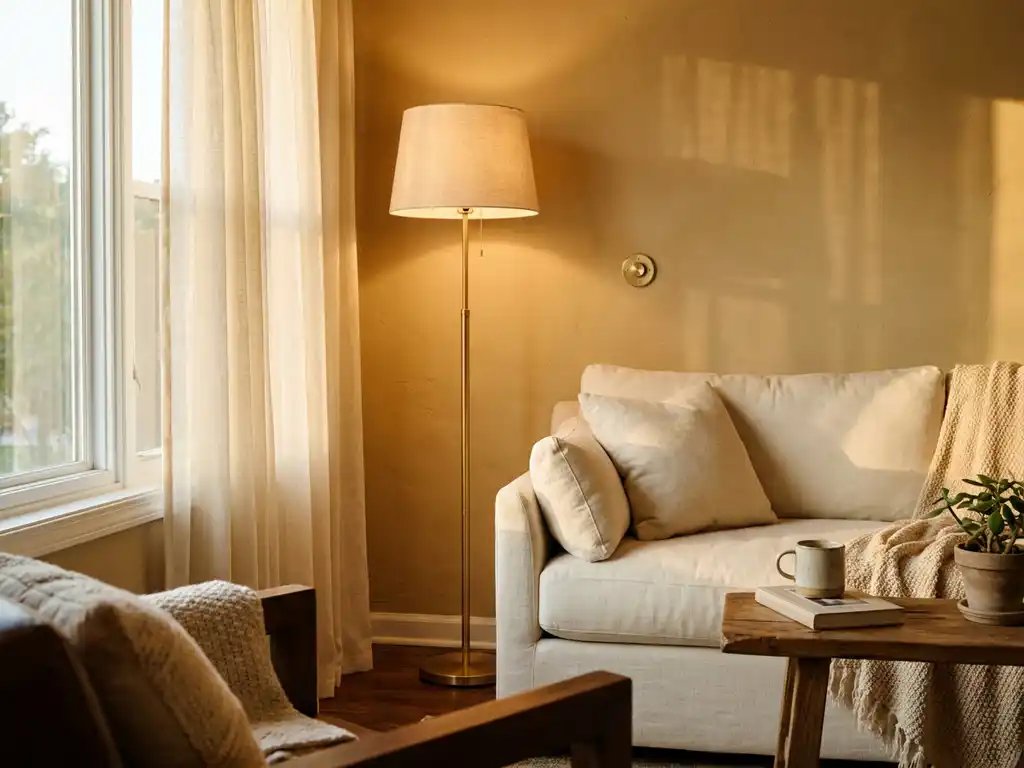
You can create the perfect mood lighting for your living room by combining the following elements: a warm light color (2700 to 3000 Kelvin), a mix of direct and indirect light sources, and the ability to dim the brightness. Ambient lighting isn’t about a single lamp, but rather a well-thought-out arrangement of light sources that together create a warm, inviting atmosphere. In this article, we answer the most important questions to help you make the right choices for your living room.
What light color creates the most ambiance in a living room?
For the coziest ambiance in a living room, choose a light color between 2700 and 3000 Kelvin, also known as warm white. This warm, yellowish light resembles candlelight and creates a relaxed, cozy atmosphere that’s perfect for a space where you want to unwind.
Cooler light colors, such as daylight (5000 to 6500 Kelvin), are ideal for workspaces and kitchens, but can quickly feel clinical and impersonal in a living room. Neutral white (3500 to 4000 Kelvin) is a compromise, but lacks the warmth that makes ambient lighting so appealing.
Want more flexibility? Then choose LED bulbs with adjustable color temperature. That way, you can enjoy slightly brighter, fresher lighting during the day and switch to a warm, cozy tone in the evening that instantly changes the atmosphere.
What is the difference between direct and indirect lighting?
Direct lighting illuminates a room or object directly from the light source, such as a ceiling light or a reading lamp. Indirect lighting reflects light off a wall, ceiling, or other surface, creating a soft glow without harsh shadows. Indirect lighting is the best choice for mood lighting.
A combination of both types works best in a living room. Direct lighting provides functional brightness in areas where you read, work, or cook. Indirect lighting, such as wall sconces, uplighters, or LED strips behind a TV stand, adds depth and warmth to the room.
Also consider the placement. Light that is positioned low in the room or comes from the side creates a much more atmospheric effect than light that shines directly from above. By placing light sources at different heights, you can create a dynamic and inviting interior.
How do you choose the right dimmer for mood lighting?
You should choose the right dimmer for mood lighting based on three factors: the type of LED bulb you’re using, the total wattage of the connected bulbs, and how you want to control the lighting. A good LED dimmer prevents flickering, doesn’t buzz, and adjusts the light smoothly from bright to almost off.
Not every dimmer works with every LED bulb. When purchasing a dimmer, check the minimum and maximum load ratings and make sure your LED bulbs are dimmable. This information is always listed on the packaging.
There are roughly three types of dimmers that work well for mood lighting:
- Rotary dimmers: classic and intuitive—simply turn the knob to the desired brightness.
- Push-button dimmers: modern and sleek, with a single button for on/off and dimming.
- Smart dimmers: controllable via an app, voice commands, or a schedule—ideal if you want to fully automate your ambient lighting.
Our LED dimmers and controls offer a wide range of options that are compatible with standard recessed frames and are easy to install yourself.
Regel het licht precies zoals u wilt
Ontdek onze led-dimmers en controls: draaiknop, drukknop of aanraakvrij — altijd upgradebaar.
Bekijk led-dimmersWhich smart lighting options work best for creating ambiance?
For ambient lighting, smart lighting options work best when they are dimmable, support adjustable color temperatures, and are easy to control via an app or automation system. Zigbee-based products are particularly popular because they are reliable, energy-efficient, and compatible with platforms such as Philips Hue, Homey, and KlikAanKlikUit.
With smart lighting, you can easily set up lighting scenes. Think of a “movie night mode” where all the lights automatically dim and the color gets warmer, or a “morning mode” that gradually brightens the light. This kind of automation makes creating mood lighting effortless.
A major advantage of smart lighting solutions is that they can be retrofitted into existing homes without the need for demolition or running new cables. Wireless wall switches and smart dimmers make it possible to upgrade your existing system without renovating.
How many light fixtures does a living room need to create a cozy atmosphere?
To create a cozy atmosphere, a living room needs at least three to five light sources, distributed across different zones and at different heights. A single central ceiling light is almost never enough; it creates harsh shadows and a flat, uninviting space lacking depth.
A good basic layout for an average living room looks like this:
- Main lighting: a ceiling light or pendant light above the seating area or dining table as the main light source.
- Reading light: a floor lamp or wall sconce next to the sofa or chair to provide focused lighting.
- Accent lighting: spotlights or LED strips to highlight art, plants, or architectural details.
- Mood lighting: candles, table lamps, or an uplighter in a corner to add a touch of warmth.
- Backlighting: indirect light behind a TV stand or along the edge of a ceiling to create depth.
The larger the living room, the more light sources you need to avoid dark corners. A room larger than 40 square meters will likely require six or more light sources to achieve a balanced result.
What are some common mistakes to avoid when choosing mood lighting?
The most common mistake when it comes to ambient lighting is relying on a single central light source for the entire room. Other common mistakes include choosing a light color that’s too cool, failing to install a dimmer, and placing all light fixtures at the same height. Together, these mistakes result in a flat, uninviting space lacking depth or warmth.
Here are the mistakes you should avoid:
- Don't install a dimmer: without a dimmer, you won't be able to adjust the lighting to suit the moment or the activity.
- Choosing light that’s too cool: LED bulbs above 4000 Kelvin can feel impersonal in a living room.
- All lights at ceiling level: vary the height of the light sources to create more depth and a cozy atmosphere.
- Too many or too few light sources: an overexposed room feels just as uncomfortable as one that’s too dark.
- Incompatible dimmers and LED bulbs: this can cause flickering, buzzing, and a shorter lifespan for your bulbs.
How Freelux helps create mood lighting in your living room
We understand that ambient lighting is about more than just choosing a nice lamp. It’s about finding the right combination of light color, light sources, controls, and smart features—without having to remodel your home or hire a technical expert.
That’s why we offer products that make an immediate difference:
- Digital LED dimmers in a variety of styles, from rotary to touch-free, that dim smoothly without flickering or humming.
- Smart dimmers with Zigbee, Bluetooth, or Wi-Fi, compatible with Philips Hue, Homey, and KlikAanKlikUit, so you can fully automate your ambient lighting.
- Easy installation without any chiseling or programming, even in existing homes with older wiring.
- Finishes that are compatible with standard System 55 recessed frames, ensuring a sleek and modern look.
Schakelen zoals het u uitkomt
Bekijk onze led-lichtschakelaars: eenvoudig te installeren en klaar voor de toekomst.
Bekijk lichtschakelaarsBrowse our full selection of LED light switches and find the perfect solution for your living room. Do you have a specific question or would you like personalized advice? Contact us and we’ll be happy to help.
Frequently Asked Questions
Can I create mood lighting in a small living room without making it feel too cluttered?
Yes, you can create excellent mood lighting even in a small living room. Opt for compact light sources such as wall sconces, small table lamps, and LED strips instead of large floor lamps. By placing lights low and using indirect lighting, you can add depth to the space without making it look smaller. A few high-quality light sources work better in a small space than many that compete for attention.
How do I start upgrading my existing lighting to ambient lighting without a major renovation?
The simplest first step is to replace your current light bulbs with dimmable LED bulbs with a color temperature of 2700 to 3000 Kelvin, and to add a compatible LED dimmer. Next, add one or two additional light sources at a lower height, such as a table lamp or an uplighter in a corner. This way, you can gradually improve the ambiance without any demolition or new wiring.
My LED light flickers when I connect it to a dimmer. What's going wrong?
Flickering is almost always caused by an incompatible combination of the LED bulb and the dimmer. First, check whether your LED bulb is actually dimmable—this is indicated on the packaging. Next, check whether the dimmer is suitable for the wattage of your LED bulbs, as many dimmers have a minimum load that isn’t always met by modern energy-efficient LED bulbs. Replace the dimmer with an LED-specific dimmer or choose a bulb that is explicitly stated to be compatible with your dimmer.
What is a good light output (lumens) for ambient lighting in the living room?
For ambient lighting in a living room, a general rule of thumb is about 100 to 150 lumens per square meter—significantly less than the 300 to 500 lumens typically used for task lighting. Because ambient lighting is intentionally softer and more subdued, spread across multiple light sources, the total lumen output per fixture is less important than the distribution and direction of the light. With a dimmer, you can always adjust the light intensity to suit the moment, which makes the exact lumen value less critical.
Are smart lighting systems like Zigbee difficult to set up for someone without technical knowledge?
Modern Zigbee systems are designed to be easily set up by non-technical users via a smartphone app. You connect the lights or dimmers to a hub or gateway through the app, and from there you can set up lighting scenes and automations using simple sliders and schedules. The biggest challenge is choosing compatible products within the same ecosystem, such as Philips Hue or Homey, so that all devices work together seamlessly.
Can I use LED strips as my main source of ambient lighting, or are they only suitable for accent lighting?
LED strips are most effective as accent lighting, for example behind a TV stand, along the edge of a ceiling, or under a kitchen counter. As a primary light source, they are generally too dim and too directional to comfortably illuminate an entire room. Always combine LED strips with other light sources, such as a pendant light or floor lamp, for a balanced and atmospheric result.
Which color of wall paint or interior finish best enhances ambient lighting?
Warm, matte shades such as off-white, sand beige, terracotta, or deep taupe absorb less light than cool or glossy surfaces and reflect the warm light spectrum in a soft, diffused way. Glossy or cool-gray walls reflect light more sharply and can negate the warm tone of your lamps. Indirect lighting, such as an uplighter aimed at a warm wall color, greatly enhances the atmospheric effect because the reflected light bathes the entire room in a warm glow.
Related articles
- Kunnen LED tl in een gewoon armatuur?
- Wat zijn de meest voorkomende fouten bij het aansluiten van een dimmer?
- Wat zijn de nadelen van het gebruik van een omschakelaar?
- Why is the minimum setting on a dimmer important?
- How does dimmed light affect your mood?
Deze inhoud is gegenereerd met behulp van AI en kan fouten bevatten.