 4.6 / 5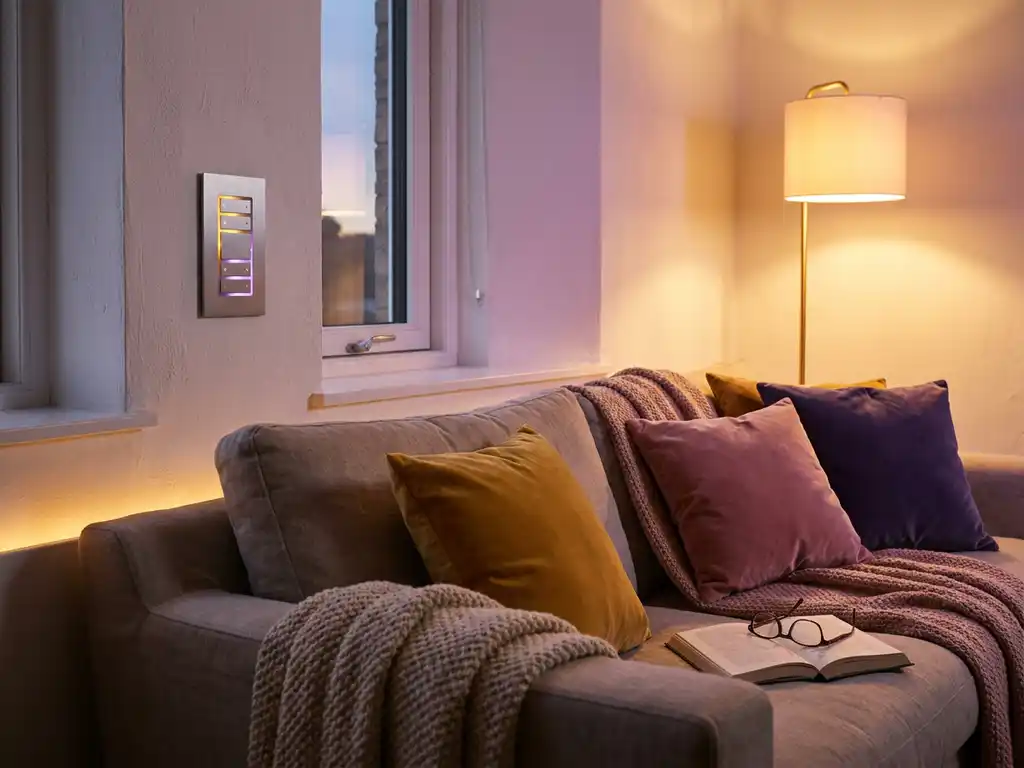
Yes, ambient lighting can have a noticeable effect on your mood. The color, intensity, and warmth of light have a direct impact on your hormone balance, energy levels, and state of mind. This applies to anyone who uses lighting at home—which is virtually everyone. In this article, we answer the most frequently asked questions about light and mood, from light color to smart lighting options.
How does light color affect your mood and feelings?
Light color affects your mood by regulating your biological clock and hormone production. Bluish, cool light stimulates your nervous system and increases your alertness, while warm, orange-yellow light promotes relaxation and supports melatonin production. Your body responds to light color in the same way it responds to the position of the sun.
During the day, bright, neutral light is ideal for concentration and productivity. Your brain associates cool white light with daylight, which puts it into an active mode. In the evening, warm ambient light has a calming effect because it helps you transition into sleep.
Light color is expressed in Kelvin (K). The lower the number, the warmer and yellower the light. The higher the number, the cooler and bluer the light. For example, an incandescent bulb has a color temperature of around 2700K, while daylight is around 6500K. For creating ambiance at home, the range between 2200K and 3000K is most effective.
Regel het licht precies zoals u wilt
Ontdek onze led-dimmers en controls: draaiknop, drukknop of aanraakvrij — altijd upgradebaar.
Bekijk led-dimmersWhat is the difference between warm white and cool white light?
Warm white light (2200K to 3000K) creates a cozy, orange-yellow glow that radiates relaxation and warmth. Cool white light (4000K and higher) has a bright, blue tint that promotes alertness and focus. The difference lies not only in the appearance but also in the effect on your body and mood.
Warm white light is ideal for living rooms, bedrooms, and dining areas. It creates a welcoming atmosphere and helps you relax more quickly. Cool white light is better suited for a home office, bathroom, or kitchen, where you want to see clearly and work with focus.
A common mistake is using cool white light throughout the entire home. This can create a clinical atmosphere that feels exhausting, even if the space is otherwise tastefully decorated. By carefully choosing the right lighting for each area, you can transform the feel of a room without moving a single piece of furniture.
What light intensity is best for relaxation?
For relaxation, low light intensity works best. Dim lighting between 100 and 300 lux, combined with a warm color temperature, signals to your body that the day is over and it’s time to wind down. Bright lighting above 500 lux keeps your brain active and hinders relaxation.
Lux is the unit used to measure illuminance. In a well-lit office space, 500 lux is the standard, but that’s far too bright for a relaxing evening at home. Think of the soft glow of a table lamp or indirect lighting along the walls.
Dimmable lighting is therefore not a luxury, but a practical choice. With a dimmer, you can adjust the brightness to suit the time of day and your activity. This way, you can use the same light for both a productive afternoon and a quiet evening on the couch.
Can ambient lighting help with stress and sleep problems?
Ambient lighting can certainly help reduce stress and improve sleep. Warm, dimmed lighting in the evening reduces the production of cortisol (the stress hormone) and stimulates melatonin, the hormone that regulates sleep. It’s a simple change with a measurable impact on your well-being.
Blue light, such as that emitted by bright fluorescent lights or screens, suppresses melatonin and keeps you awake. By switching to warm, ambient lighting two hours before bedtime, you give your body time to prepare for sleep. This is an approach that sleep experts have been recommending for years.
Stress also responds well to lighting conditions. A room with soft, warm lighting feels safer and calmer than a bright, cool space. This is because our brains associate lighting conditions with safety and shelter. Ambient lighting is therefore an accessible way to use your home environment more effectively to promote mental well-being.
Practical tips for better sleep hygiene using light:
- Turn off bright ceiling lights after 9:00 p.m.
- Use table lamps or floor lamps with warm white light in the evening
- Gradually dim your lights in the two hours before bedtime
- Avoid blue light from screens, or use night mode on your devices
- Don't use cold white light in the bedroom
What smart lighting options are available to create a cozier atmosphere at home?
To create a cozier atmosphere at home, there are various smart lighting options available, ranging from simple dimmers to fully automated systems. The most accessible options include dimmable LED lights, smart switches, and Zigbee- or Bluetooth-controlled lighting systems that you can operate via an app or voice commands.
Here are the most popular options:
- Wireless dimmers: These let you adjust the brightness without any new wiring. Ideal for existing homes.
- Smart wall switches: Can be connected to platforms such as Philips Hue, Homey, or KlikAanKlikUit for automation.
- Zigbee-compatible lighting control: Works with a wide range of smart devices and offers great flexibility.
- Timer switches and astronomical timers: Automatically turn lights on and off based on the time of day or sunset.
- Touchless dimmers: Convenient and hygienic, and they add a modern touch to any interior.
The great thing about modern smart lighting is that you don’t need to do any major renovations. Many systems are wireless and work even in older homes with existing wiring. You can start small with a single dimmer in the living room and expand to other rooms later.
Schakelen zoals het u uitkomt
Bekijk onze led-lichtschakelaars: eenvoudig te installeren en klaar voor de toekomst.
Bekijk lichtschakelaarsHow Freelux Helps Create Ambient Lighting at Home
We understand that ambient lighting makes a difference, but that installing it shouldn’t be a hassle. That’s why we develop products that are smart yet easy to use. Whether you’re installing a dimmer for the first time or want to equip your entire home with smart lighting controls, we offer a solution that’s right for you.
Here’s what we offer to help you create a cozier atmosphere at home:
- A wide range of digital LED dimmers in various wattages and models, suitable for any type of LED lighting
- Wireless and wired dimmers that fit into standard System 55 flush-mount frames
- Smart LED light switches compatible with Philips Hue, Homey, and KlikAanKlikUit
- Products that work in older homes as well, without the need for demolition or major renovations
- A no-nonsense approach: smart features, easy installation, modern design
Would you like to know which lighting solution best suits your home and needs? Please contact us, and we’ll be happy to assist you.
Frequently Asked Questions
How soon will I notice a difference if I switch to warm ambient lighting in the evening?
Most people notice a difference within just a few days in how quickly they relax and fall asleep in the evening. Your body adapts relatively quickly to new light cues, because your hormone balance reacts immediately to light color and intensity. To get an accurate result, it’s recommended that you consistently follow this routine for at least a week before drawing any conclusions.
Can I replace standard light bulbs with warmer alternatives, or do I need a whole new system?
You certainly don’t need to buy an entirely new system. In many cases, simply replacing your current bulbs with LED bulbs that have a color temperature between 2200K and 2700K is sufficient. To do this, check the Kelvin rating on the packaging. If you also want to be able to adjust the light intensity, adding one dimmer per room is a logical and affordable next step.
Does a dimmer work with all types of LED bulbs?
Not every LED bulb is dimmable, and not every dimmer works with every type of LED. Always check that the bulb is labeled "dimmable" on the packaging, and choose a dimmer that is specifically designed for LED lighting. An LED dimmer that isn't properly matched to the bulb can cause flickering, buzzing, or a limited dimming range. Manufacturers such as Freelux offer dimmers that have been tested for compatibility with common LED types.
What if I live in a rental property and am not allowed to modify the wiring?
Even as a renter, you can easily get started with mood lighting. Wireless dimmers, smart plug lights, and standalone table lamps with dimming functions require no modifications to the wiring or the outlet. Bluetooth- and Zigbee-controlled systems operate completely wirelessly and are easy to take with you when you move. This way, you can enjoy all the benefits of smart lighting without having to turn a single screw.
How do I adjust my lighting for different activities in the same room?
The smartest approach is to use zones and dimmable lighting. Use brighter ceiling lights for activities like cooking or reading, and switch to table lamps or floor lamps for relaxation or a dinner party. With a smart lighting system, you can set a preset scene for each activity, so you can completely change the atmosphere with the push of a button without having to adjust the lights manually every time.
Does ambient lighting also affect children and their sleep patterns?
Absolutely. Children are actually more sensitive to light than adults because their eyes allow more blue light to reach the brain. Warm, dimmed lighting in the hours before bedtime also helps trigger melatonin production in children and makes the transition to bedtime more peaceful. Avoid bright overhead lighting and screens in the bedroom and opt for a nightlight with a warm, orange glow.
Can I also connect smart lighting to other smart devices in my home?
Yes, that’s one of the major advantages of Zigbee- and Wi-Fi-based lighting systems. You can connect lighting to platforms like Homey, Google Home, or Apple HomeKit to create automations that go beyond just lighting. Think of lights that automatically dim when you start a movie, or that gradually turn on in the morning as an alarm clock. Just make sure your devices are part of the same ecosystem to avoid compatibility issues.
Related articles
- Wat is beter, serieschakeling of parallelschakeling?
- Waarom gaan led lampen zo snel stuk?
- Kan ik een 50 watt gloeilamp vervangen door een LED lamp?
- Can you dim the lights outside?
- Why is dimming the lights in the evening good for your sleep?
Deze inhoud is gegenereerd met behulp van AI en kan fouten bevatten.