 4.6 / 5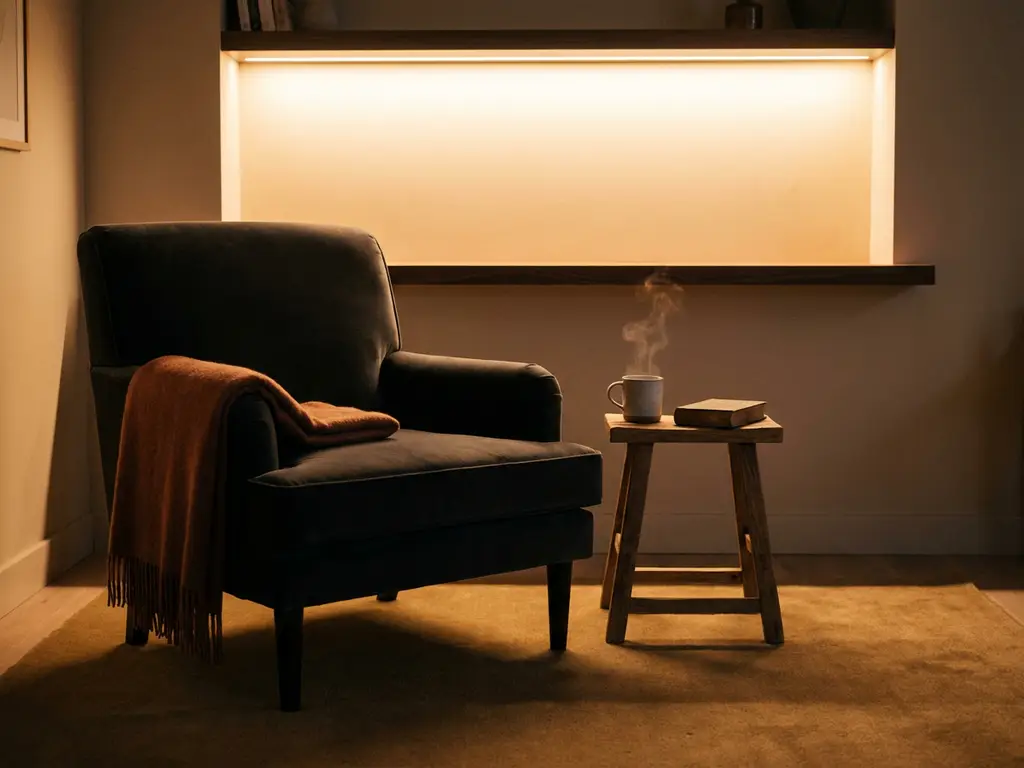
Dimmed lighting has a direct impact on your mood: it reduces mental alertness, promotes relaxation, and creates a sense of warmth and comfort. This effect occurs because your brain associates the light intensity with the time of day and adjusts your energy levels accordingly. In this article, we answer the most frequently asked questions about dimming lights and how to make the most of it at home.
How does light intensity affect your brain?
Light intensity directly influences hormone production in your brain. Bright light stimulates cortisol, the hormone that keeps you awake and alert. Dimmed light signals that the day is coming to an end, triggering melatonin production and helping your body prepare for rest. Your brain uses light as a biological clock.
This mechanism is rooted in evolution. Our brains are programmed to associate bright light with activity and dim lighting with rest. In a modern home, you can consciously harness this process by adjusting the light intensity to suit your current needs. Need to focus? Turn up the light. Want to relax after a busy day? Dim it to a comfortable level.
It’s also interesting to note that dimmed lighting reduces cognitive focus, which actually feels pleasant in a relaxing setting. Your mind wanders more easily, conversations become more intimate, and you feel less pressure to be productive. That’s not a side effect—it’s exactly the point.
What moods are enhanced by dimmed lighting?
Dimmed lighting primarily promotes relaxation, intimacy, and creativity. The lower light intensity reduces mental alertness and encourages calm. In a dimly lit space, people feel more at ease, less self-conscious, and more inclined to engage in open conversations or creative thinking.
Depending on the situation, you can use dimming for various purposes:
- Relaxation and stress reduction: After a long day at work, dimmed lighting helps calm your nervous system.
- Romantic atmosphere: Soft, subdued lighting creates a sense of intimacy and coziness.
- Creative activities: A slightly dimmed room reduces distractions and encourages free thinking.
- Preparing for sleep: Dim the lights at least an hour before bedtime to help your body wind down.
- A moment of rest during the day: It’s easier to relax with a book or some music in softer light.
What dimming doesn't do is lift your spirits when you're feeling down. For that, bright, cool light is actually more effective. Dimming works best when you're consciously seeking calm, not as a substitute for energy.
How do warm and cool dimmed lights differ in effect?
Warm, dimmed light—with a color temperature below 3000 Kelvin—has a calming and inviting effect. Cool, dimmed light—above 4000 Kelvin—continues to feel more stimulating, even at lower intensities. It is the combination of color temperature and light intensity that determines the mood-setting effect, not brightness alone.
Warm light in a dimmed setting mimics the ambiance of candlelight or a sunset. Your brain recognizes this color as a sign that the day is coming to an end, which helps you relax. This makes warm, dimmed light ideal for the living room, bedroom, or dining room in the evening.
Cool, dimmed light is sometimes used in workspaces where you want to stay focused in the evening, but without the full intensity of daylight. It’s less conducive to relaxation, but less tiring on the eyes when working at a computer screen. For most living spaces, choose warm light if you want to dim the lights to create a cozy atmosphere.
At what time of day does dimming work best?
Dimming works best in the evening, starting about two hours before bedtime. At that point, your body has already naturally begun the transition to rest, and dimmed lighting supports that process. During the day, dimming has less of an effect on your mood, because your circadian rhythm is geared toward activity.
However, there are also times during the day when dimming is useful:
- After lunch: A short rest in dimmed lighting helps you recharge without falling completely asleep.
- During a conversation or meeting at home: Dimming the lights a little creates a more informal and relaxed atmosphere.
- When meditating or doing yoga: Dimmed lighting helps you focus your attention inward.
- At mealtime: A dimly lit dining room encourages relaxed dining and pleasant conversation.
In the morning, dimming is actually not recommended if you want to start the day feeling awake and energetic. Bright light in the morning sets your circadian rhythm on the right track and helps you start the day productively. So use dimming intentionally as a switch between activity and rest, not as a default setting for the entire day.
How do you set up dimmable lighting to create the best atmosphere at home?
To create the best atmosphere at home, set dimmable lights to about 30 to 50 percent of their maximum brightness in relaxation areas in the evening. Combine this with a warm color temperature and ensure that the light is indirect, for example, using wall sconces or floor lamps. This will create depth and softness in the room.
Here are a few practical tips for getting the most out of your dimmable lighting:
- Use several light sources set to a low brightness level instead of a single light at full brightness.
- Dim the ceiling light and leave a lamp on a table or the floor slightly brighter to create a layered effect.
- Set preset dimming levels for recurring occasions, such as dinner or movie night.
- Choose LED lighting that is dimmable, because not all LEDs respond well to a dimmer.
A good dimmer makes all the difference between a light that flickers or hums and one that responds smoothly and quietly. With our selection of LED dimmers and controls, you can find the right dimmer for your setup and lighting type.
How Freelux Helps You Dim the Lights at Home
At Freelux, we understand that the right lighting does more than just illuminate a space. It’s about comfort, ambiance, and well-being. That’s why we offer a wide range of digital LED dimmers that are easy to install, even in existing homes without major renovations.
What we offer for the ideal dimming experience at home:
- Rotary dimmers and push-button dimmers for intuitive control in any room.
- Smart dimmers with Zigbee, Bluetooth, or Wi-Fi for integration with platforms such as Philips Hue, Homey, and KlikAanKlikUit.
- Compatible with System 55 flush-mount frames, so our dimmers fit into existing wall boxes.
- Energy-saving operation that reduces your lighting and electricity usage.
- WIIS-compatible products for a future-proof, expandable lighting system.
Would you like to try dimming your lights to create a better atmosphere at home? Check out our selection of digital LED dimmers in our online store, or contact us for personalized advice.
Frequently Asked Questions
Can I use any LED bulb with a dimmer, or do I need to buy special bulbs?
Not every LED bulb is suitable for use with a dimmer. Always check that the packaging indicates that the bulb is "dimmable." If you use a non-dimmable LED bulb with a dimmer, the bulb may flicker, hum, or fail prematurely. It is best to choose bulbs and dimmers from the same brand or check the dimmer manufacturer's compatibility list.
How low can I dim the light without causing problems with the bulb?
Most dimmable LED bulbs operate reliably between 10 and 100 percent of their maximum brightness, but the exact minimum level varies by bulb and dimmer. If you dim the light too much, the bulb may start to flicker or even go out. When using a new combination, always test the full dimming range and set your regular dimming levels well above the bulb’s minimum.
What is the difference between a rotary dimmer and a push-button dimmer, and which one is best for me?
A rotary dimmer lets you adjust the light level analogously by turning the knob, which is intuitive and precise. A push-button dimmer is operated by pressing briefly or holding down, which is handy if you want to switch the light on or off quickly without fine-tuning the brightness. For rooms where you regularly use the same dimming level, a push-button dimmer with a memory setting is very practical. If, on the other hand, you want a lot of variation in brightness, a rotary dimmer offers more control.
Can I install a smart dimmer without having a smart home system?
Yes, most smart dimmers also function as regular dimmers without being connected to a smart home platform. You can then use the basic features directly through the wall switch. If you want to add voice control, schedules, or integration with platforms like Homey or Philips Hue later on, the dimmer is already set up for that. So you don’t have to set everything up all at once.
My dimmer is buzzing or the light is flickering—what can I do about it?
Buzzing or flickering usually indicates an incompatibility between the dimmer and the connected LED bulbs. First, check whether the bulbs are actually dimmable and whether the total load falls within the dimmer’s power range. If that doesn’t help, adding a neutral wire jumper or adjusting the dimmer’s minimum setting may resolve the issue. If in doubt, consult the technical manual or contact the supplier.
How much energy do I actually save by dimming my lights?
With LED lighting, the energy savings from dimming are immediate and proportional: if you dim the light to 50 percent, that light will consume about 50 percent less energy. When multiple light fixtures are dimmed for a few hours each day, the annual savings add up quickly. In addition, dimming extends the lifespan of LED bulbs, which also reduces replacement costs.
Can I also use dimmable lighting for children who have trouble falling asleep?
Absolutely, dimmed warm light is one of the most effective ways to help children relax before bedtime. Start dimming the lights in the children’s room at least an hour before bedtime and choose a warm color temperature below 3000 Kelvin. This supports natural melatonin production in children as well and makes the transition to sleep smoother. Combine this with a consistent evening routine for the best results.