 4.6 / 5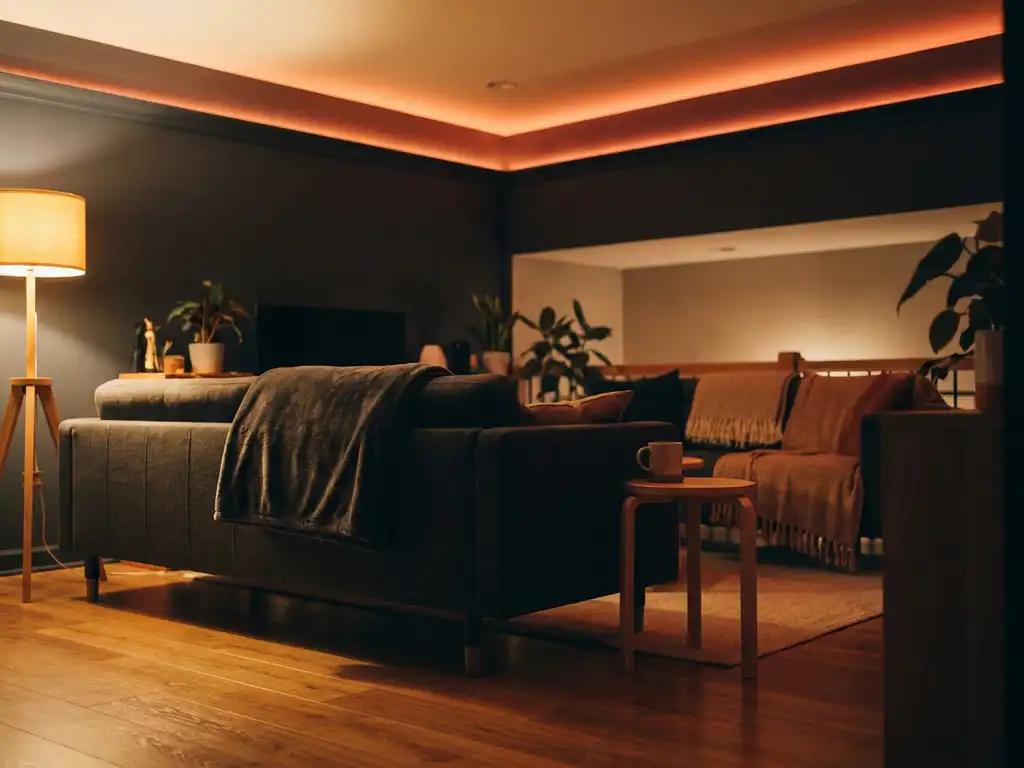
Ambient lighting is lighting designed primarily to create a warm, relaxed, or inviting atmosphere, rather than to provide functional illumination for a space. It’s about light that you feel rather than need. Ambient lighting plays a major role in how comfortable and pleasant a home feels, and it’s much easier to achieve than most people think. In this article, we answer the most frequently asked questions about ambient lighting, from the basics to practical tips for your home.
What makes lighting feel inviting?
Lighting creates a warm, inviting atmosphere through a combination of light color, light intensity, and the way the light is distributed throughout the space. Warm white light (between 2700 and 3000 Kelvin), low brightness, and indirect or subdued lighting are the three key factors that work together to create a cozy, warm atmosphere.
The color temperature of light has a direct impact on the atmosphere of a room. Cool, bright light energizes and stimulates, while warm light promotes relaxation. That’s exactly why candlelight feels so pleasant: it has a warm color and low intensity.
In addition to color, the direction of the light plays a major role. Light that shines upward or to the side and is reflected off walls or ceilings feels softer and warmer than direct overhead light. Consider a floor lamp in the corner of the room versus a bright ceiling fixture. The corner lamp always wins when it comes to ambiance.
Finally, dimming makes a huge difference. As soon as you lower the light intensity, the entire atmosphere of a room changes. A bright room suddenly becomes a place to relax, without you having to change a single thing.
What are the best light sources for ambient lighting?
The best light sources for ambient lighting are warm-white LED bulbs with a color temperature of 2700 to 3000 Kelvin, preferably dimmable. They combine the warm glow of traditional incandescent bulbs with the energy efficiency and long lifespan of modern LED technology.
Not every LED bulb is suitable for mood lighting. When choosing one, look for the following features:
- Color temperature: choose 2700K (extra warm) or 3000K (warm white)
- CRI value: a Color Rendering Index of 80 or higher ensures true-to-life colors
- Dimmable: Always check whether the bulb is dimmable if you are using a dimmer
- Light distribution: a wide beam (120 degrees or more) spreads light more evenly throughout the room
In addition to standard LED bulbs, there are also filament LED bulbs, which mimic the look of traditional incandescent bulbs. They emit a particularly warm and decorative light and are popular in open fixtures where the bulb is visible. For an even more personalized atmosphere, you might also consider light strips behind furniture or in alcoves, which provide indirect lighting without a visible light source.
How does ambient lighting differ from functional lighting?
Ambient lighting and task lighting differ in purpose, intensity, and light color. Task lighting is designed to facilitate activities such as cooking, reading, or working, and requires high brightness and often cool white light. Ambient lighting does not serve a task-oriented purpose, but rather creates a sense of comfort, warmth, and atmosphere in a room.
In the teachings on enlightenment, this distinction is also referred to as the three levels of enlightenment:
- General lighting: the basic lighting in a room, such as a ceiling light or recessed spotlights
- Task lighting: focused light on a workspace, countertop, or desk
- Accent lighting and ambient lighting: decorative lighting that adds depth, warmth, and character
Ambient lighting falls into the third category. It doesn’t need to illuminate a room, but it does make the space more pleasant to be in. A well-lit home combines all three layers, so that in the evening you can dim or turn off the functional lighting and let the ambient lighting take over.
The great thing is that with a dimmer, you can easily switch between functional and ambient lighting without needing two separate lighting systems.
How can you create mood lighting without renovating?
You can create mood lighting without any renovations by combining existing fixtures with dimmable LED bulbs, wireless dimmers, and smart light switches. You don’t need to tear down walls or run new wiring to completely transform your lighting.
Here are the most effective ways to add ambient lighting to an existing home:
- Replace your current light bulbs with dimmable warm-white LED bulbs
- Install a wireless dimmer on your existing switch, without any additional wiring
- Add a floor lamp or table lamp in strategic spots, such as corners and next to the sofa
- Use LED light strips behind furniture or in cove lighting fixtures to create indirect lighting
- Replace a standard wall switch with a smart light switch that supports dimming and scheduled timers
The biggest advantage of this approach is that you can take it one step at a time. Start with a single room, see the difference for yourself, and then expand from there. Wireless solutions are particularly ideal for rental properties or older homes with outdated wiring, since you don’t have to make any structural changes.
Can you also control mood lighting automatically?
Yes, you can control mood lighting fully automatically using a dimmer, a timer, or a smart lighting system. You can set the time the lights turn on, how bright they are, and when they automatically dim or turn off, so the atmosphere in your home is always just right without you having to think about it.
Automatic mood lighting works on different levels, depending on how smart you want to make it. A simple timer switch is enough to ensure that warm lighting turns on automatically in the evening. A dimmer with adjustable levels lets you choose the right brightness for any moment. And a fully smart system, such as a Zigbee-based solution compatible with platforms like Philips Hue, Homey, or KlikAanKlikUit, allows you to program lighting scenes that automatically change based on the time of day or activity.
With digital LED dimmers, you can take a big step toward automated mood lighting, even without a full smart-home system. They’re easy to install and immediately improve the comfort of your home.
How Freelux Helps Create Ambient Lighting
At Freelux, we understand that mood lighting doesn’t have to be complicated. That’s why we offer products that make an immediate difference, without requiring any renovations or technical expertise.
Our mood lighting solutions include, among others:
- Wireless LED dimmers: easy to install on your existing switch, no new wiring required
- Digital rotary dimmers and push-button dimmers: for precise light control in every room
- Smart versions with Bluetooth, Wi-Fi, or Zigbee: compatible with Philips Hue, Homey, and KlikAanKlikUit
- Timer switches and astro-timers: for automatic ambient lighting at just the right time
- All products are available in modern finishes and fit standard System 55 mounting frames
Whether you want to upgrade a single room or make your entire home smarter, we have the right solution for you. Browse our selection in the online store or contact us for personalized advice.
Frequently Asked Questions
How many lamps or light fixtures do I need to create a cozy atmosphere in a room?
There’s no hard-and-fast rule, but a good guideline is to aim for several small light sources spread throughout the room, rather than a single central light source. For an average living room, three to five light sources at different heights and angles are ideal. Consider a combination of a floor lamp, one or two table lamps, and perhaps a string light or wall sconce. The more layered your lighting, the richer and more atmospheric the result.
What is the difference between a dimmer and a smart switch, and which one do I need?
A dimmer only controls the brightness of your light, while a smart switch offers additional features such as timers, the ability to set lighting scenes, and control via an app or voice assistant. For basic lighting, a regular dimmer is more than enough and the easiest way to get started. If you want more control, automation, or integration with a smart home system like Homey or Philips Hue, then a smart switch is the better choice.
Do all LED bulbs work with a dimmer, or is there anything I need to keep in mind?
Not all LED bulbs are dimmable, and using a non-dimmable bulb with a dimmer switch can cause flickering, buzzing, or premature bulb failure. Always check that the bulb is explicitly labeled as "dimmable" on the packaging. In addition, it is important that the dimmer is compatible with LED technology, as older dimmers are often designed for incandescent bulbs and do not work well with modern LEDs.
Can I use mood lighting in a small space without making it look dark or cramped?
Absolutely, and ambient lighting actually works well in small spaces as long as you use it wisely. Use indirect light that shines upward or along the walls to make the space appear larger. Avoid heavy, dark fixtures low in the room and opt instead for light strips, wall sconces, or a slim floor lamp in a corner. A dimmer gives you the flexibility to use more light during the day and dim it in the evening for ambiance, without the room ever feeling cramped.
What common mistakes should I avoid when creating mood lighting?
The most common mistake is relying on a single central light source, such as a ceiling fixture, for the entire room. This results in a flat, impersonal look that lacks depth or warmth. Another common mistake is choosing bulbs with a color temperature that is too high (cool white above 4000K), which creates a clinical rather than a warm atmosphere. Finally, many people forget that the choice of fixture matters too: a bulb in an open, visible fixture contributes more to the atmosphere than the same bulb hidden behind an opaque shade.
Is mood lighting also suitable for the bedroom, and are there any special considerations?
The bedroom is the perfect place for ambient lighting, because warm, dimmed light in the evening promotes melatonin production and helps your body relax and prepare for sleep. For this, opt for lamps with a color temperature of 2700K or lower. Avoid bright ceiling lights in the evening and opt for bedside lamps or a dimmable wall lamp next to the bed. A dimmer with an adjustable minimum setting is a smart investment here.
How can I incorporate mood lighting into the rest of my interior without making it look cluttered?
The key is consistency in color temperature: always use light sources within the same range (for example, all 2700K) in a single room so that the light creates a cohesive whole. Choose fixtures that match the style of your interior, but vary their height and position to create visual depth. A useful guideline is the “triangle rule”: place three light sources at different heights and angles in the room to create a balanced and cohesive whole.