 4.6 / 5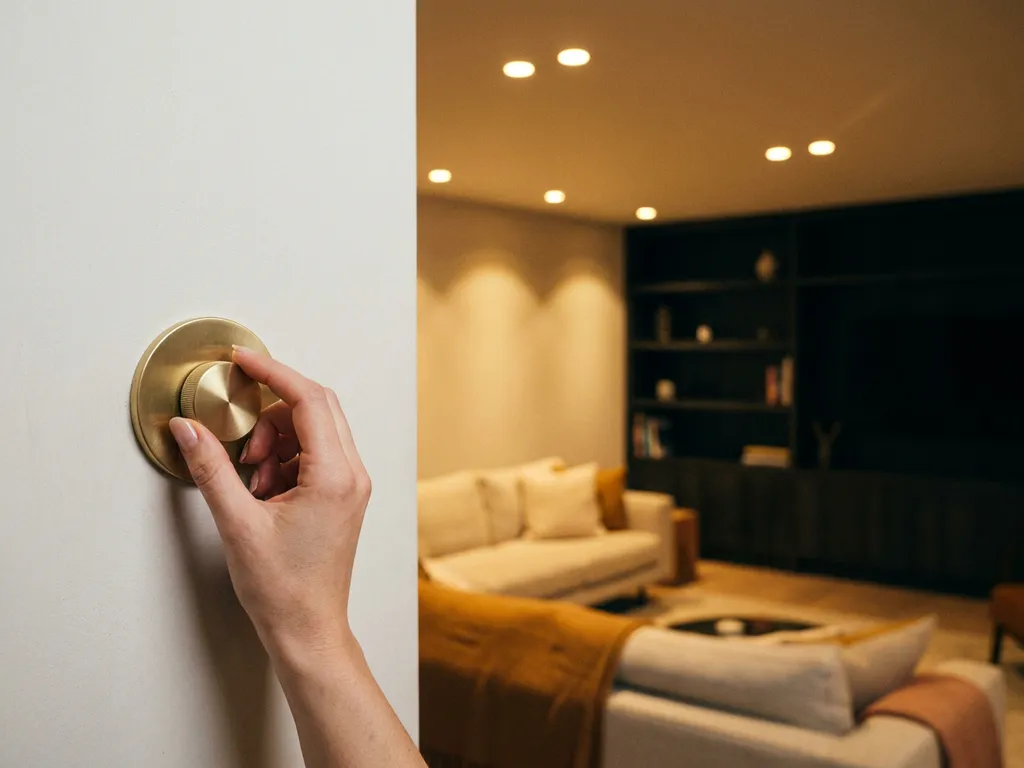
You can dim ceiling spotlights by installing a compatible LED dimmer and checking whether your spotlights are dimmable. Both the dimmer and the LED spotlight must be compatible to ensure smooth dimming. In this article, we answer the most frequently asked questions about dimming ceiling spotlights, from choosing the right dimmer to fixing flickering lights.
What type of dimmer do you need for ceiling spotlights?
For ceiling spotlights, you need an LED dimmer that is specifically designed for low-power LED lighting. A standard dimmer intended for incandescent bulbs does not work well with LED spotlights and almost always causes problems such as flickering or a minimum brightness level that cannot be lowered enough. Always choose a dimmer with a power range that matches the total wattage of your spotlights.
There are several types of dimmers available for ceiling spotlights:
- Rotary dimmers: classic and simple—you adjust the brightness with a rotary knob
- Push-button dimmers: modern and compact; pressing turns the light on or off; holding down dims the light
- Touch-free dimmers: ideal for damp areas or for people with reduced grip
- Smart dimmers (Zigbee, Wi-Fi, or Bluetooth): controllable via an app or voice assistant, ideal if you already have a smart home system
When making your choice, also pay attention to the dimmer’s minimum load. Many modern LED spotlights consume only a few watts each. If your dimmer requires a minimum load of 40 watts but your spotlights together consume only 20 watts, the dimmer will not work properly. Therefore, choose an LED dimmer with a low minimum power rating, preferably starting at 0 or 5 watts.
Regel het licht precies zoals u wilt
Ontdek onze led-dimmers en controls: draaiknop, drukknop of aanraakvrij — altijd upgradebaar.
Bekijk led-dimmersAre all LED spotlights dimmable?
No, not all LED spotlights are dimmable. Whether an LED spotlight can be dimmed depends on the built-in driver in the fixture. Dimmable LED spotlights are specifically designed to work with an external dimmer. Non-dimmable spotlights may be damaged or flicker if you connect them to a dimmer anyway.
The packaging or product specifications will always indicate whether a spot light is dimmable. Look for the dimmer symbol or the word “dimmable.” If you’re buying spot lights online, you’ll find this information in the product description. If you’re using existing spot lights and aren’t sure, you can look up the model number on the manufacturer’s website.
A practical tip: if you plan to dim your lights, always buy dimmable spotlights and a compatible LED dimmer at the same time. That way, you can be sure they’re compatible and avoid any hassle later on with flickering or uneven dimming.
How do you know if your current wiring is compatible with a dimmer?
In most cases, the existing wiring in a home is already compatible with a dimmer switch. A standard dimmer switch operates on the same two-wire system as a regular switch. You don’t need to run any additional wiring for a traditional recessed dimmer switch, as long as there is a live wire and a neutral wire.
If you want to install a smart dimmer, it can sometimes be a different story. Some smart dimmers require a neutral wire (N-wire) to function, but in older homes, this wire isn’t always run all the way to the switch box. In that case, there are two options:
- Choose a smart dimmer that works even without a neutral wire, also known as a “no-neutral” dimmer
- Have an electrician run a neutral wire to the switch box
Are you concerned about the wiring in your home? If so, hire a licensed electrician to inspect it. Safety always comes first.
Can you dim spotlights without changing the wiring?
Yes, in many cases you can dim spotlights without altering the wiring. A standard recessed dimmer simply replaces the existing switch and uses the same wiring. This is a job that many people can do themselves, provided you turn off the power at the circuit breaker panel first.
If you don’t want to touch any wiring at all, wireless dimmers are the perfect solution. These operate without additional wiring and communicate via a wireless signal with a receiver that you place near the light fixture or inside the junction box. This allows you to add dimming functionality to an existing installation without moving a single wire. This is especially useful in older homes or in spaces where it’s impractical to do any demolition work.
Why do spotlights flicker when you dim them?
Spotlights almost always flicker when dimmed due to an incompatibility between the dimmer and the LED bulb. The most common causes are a dimmer that is not suitable for LEDs, an LED spotlight that is not dimmable, or a combination where the dimmer is being used outside its operating range. Flickering is a sign that the dimmer and bulb are not working well together.
Other causes of flickering light when dimming:
- Underload: the dimmer is being used below its minimum power rating
- Incompatible technology: The dimmer uses trailing-edge or leading-edge dimming, which is not compatible with the driver in the spotlight
- Poor-quality light fixture: Cheap LED spotlights sometimes have an unreliable driver that is sensitive to dimming
- Loose connection: a loose connection in the junction box can also cause flickering
The solution is almost always to replace the dimmer with a model specifically designed for LED lights, or to replace the spotlights with dimmable ones that are compatible with your dimmer. Always check the dimmer manufacturer’s compatibility list.
Which dimmer works with spotlights in an existing home?
For spotlights in an existing home, a universal LED recessed dimmer works best in most situations. These dimmers are designed for a wide range of dimmable LED bulbs and have a low minimum wattage, making them ideal for modern energy-efficient spotlights. They fit into a standard recessed box and can be installed directly into standard System 55 frames.
Do you already have a smart home system, or do you want to control your lighting remotely? If so, a wireless dimmer with Zigbee, Wi-Fi, or Bluetooth is a logical next step. These are compatible with platforms like Philips Hue, Homey, and KlikAanKlikUit, so you can easily integrate them with what you already have. Check out our selection of LED dimmers and controls for an overview of suitable options for existing homes.
How Freelux helps with dimming ceiling spotlights
We understand that you simply want your lighting to work properly, without complicated installations or expensive renovations. That’s why we offer a wide range of LED dimmers specifically designed for use in existing homes. Our products include:
- Suitable for dimmable LED spotlights with a low minimum power rating
- Available as a traditional recessed dimmer and as a smart wireless version
- Compatible with standard System 55 flush-mount frames, so they fit into any outlet
- Easy to install without technical knowledge or additional wiring
- Available in a variety of finishes to suit any interior
Schakelen zoals het u uitkomt
Bekijk onze led-lichtschakelaars: eenvoudig te installeren en klaar voor de toekomst.
Bekijk lichtschakelaarsWhether you're looking for a simple rotary dimmer for the living room or a smart solution you can control from your phone, you'll always find the right solution in our online store. Be sure to check out our selection of LED light switches if you'd like to upgrade your switches as well. Do you have a specific question about which dimmer is right for your situation? Feel free to contact us—we're happy to help.
Frequently Asked Questions
What is the maximum number of dimmable LED spotlights I can connect to a single dimmer?
This depends on the dimmer’s maximum capacity. Add up the total wattage of all your spotlights and make sure it stays below the dimmer’s maximum capacity. For example, a 200W dimmer can support ten 7W spotlights. Also consider the minimum power rating: if you only have a few low-wattage spotlights, choose a dimmer with a minimum load of 0 or 5 watts.
Can I install a dimmer switch myself, or do I need an electrician to do it?
Replacing a standard recessed dimmer switch is a DIY job for most people, provided you completely turn off the power at the circuit breaker panel before you begin. The wiring is identical to that of a regular switch, so no technical knowledge is required. If you’re still unsure, or if it’s a smart dimmer that requires running a neutral wire, call a licensed electrician.
My spotlights don't dim all the way down to zero—is that normal?
Yes, that’s normal for most LED dimmers and spotlights. LED lighting requires a minimum threshold voltage to stay on, which means they rarely dim all the way down to a level comparable to an incandescent bulb. If you want the lowest possible minimum brightness level, choose a high-quality dimmable LED spotlight in combination with an LED dimmer that specifically supports a low minimum power setting. Some combinations perform better in this regard than others, so check the manufacturer’s compatibility list.
Does an LED dimmer also work with 12V spotlights (using a transformer)?
Dat hangt af van het type trafo dat je gebruikt. Traditionele ferroresonante (ijzerkern)trafo’s zijn vaak niet compatibel met moderne LED-dimmers. Elektronische trafo’s werken soms wel, maar dit is sterk afhankelijk van het merk en model. De veiligste oplossing is om over te stappen op 230V dimbare LED-spots zonder externe trafo, of een dimmer te kiezen die door de fabrikant expliciet is goedgekeurd voor gebruik met jouw specifieke trafo.
Can I use a single dimmer to control spotlights in multiple groups at the same time?
A single built-in dimmer typically controls only the spotlights connected to the same switch group. If you want to dim multiple groups at the same time and to the same level, a smart dimmer system is the best option. Using platforms like Philips Hue, Homey, or KlikAanKlikUit, you can link multiple dimmers and control them as a single group via an app or automation.
What is the difference between trailing-edge and leading-edge dimming, and which one should I choose?
Leading-edge dimming is the older technology that was originally developed for incandescent bulbs and often causes problems with LED spotlights, such as humming or flickering. Trailing-edge dimming is the more modern method that works much better with the drivers in LED spotlights and provides a smoother dimming curve. For ceiling spotlights, you should always choose a trailing-edge LED dimmer, unless the manufacturer of your spotlights explicitly states otherwise.
How can I prevent my dimmer or spotlights from getting hot during use?
A slight build-up of heat in a dimmer is normal, but excessive heat is a sign of a problem. This can be caused by an overload (too much total power on the dimmer), poor ventilation in the junction box, or an incompatible combination of dimmer and light bulb. Ensure that the total wattage remains well within the dimmer’s maximum capacity—a rule of thumb is to use no more than 80% of the maximum load—and check that the junction box provides sufficient space for heat dissipation.